Cracker Barrel rebranded, and the Internet freaked out. Gwen made it her mission to find out more.
Editor’s Note: All Beacon Media content is available to republish for free on all platforms.
On my journey to Cracker Barrel, I didn’t find racists or a woke agenda, just lukewarm onion petals.
I’d been camping all weekend, so the Statesville, N.C., Cracker Barrel off Exit 151 beckoned me like a bacon grease mirage. It had been a while since I last visited a Cracker Barrel, but I was newly curious: After all, the internet has been abuzz about the ol’ barrel lately.
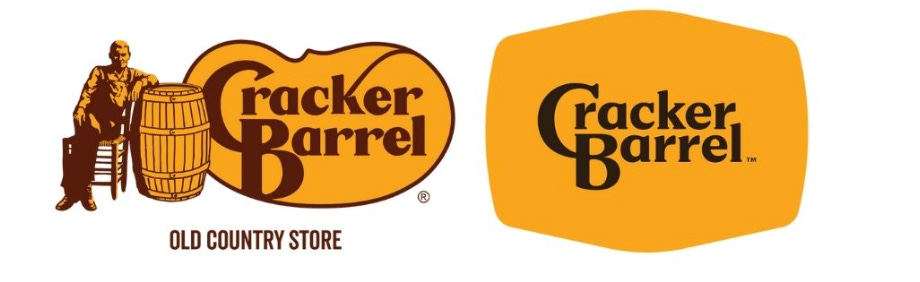
The “internet outrage” was over Cracker Barrel’s rebranding. The company tried to ditch its old logo featuring an old timer in overalls sitting next to a barrel for a generic logo that looked like, well, nothing.
Best I can tell, one narrative was about the “erasure” of the old-timer and the restaurant’s distinct down-home country vibe. Donald Trump Jr., Charlie Kirk, and even the President of the United States — among others forever seeking new indignities — jumped in to blame “wokeness.” Have they ever had a country-fried steak?
But then, as it goes, a second, reactive narrative emerged. This one about hordes of old white people so furious about the logo change that they were demanding its reversal. You would have thought those front porch rocking chairs were being burned in protest by boomers.
Were either of these narratives remotely true? From my vantage point behind a hashbrown casserole: No, not at all. Real people, offline, in real places like Statesville, are about as worked up about this as watery grits.
The Cracker Barrel brand change was just another opportunity for those who wheel and deal in divisive politics to stoke flames. Jon Casey wrote in The Advocate that the incident demonstrated that “the fragile, seething anger of white men who still believe they own America is alive and kicking,” while Ron Hart wrote in the Chattanooga Times Free Press: “Don’t PC on us and tell us it’s raining.” Hart also made sure to demean women, Black Lives Matter, and trans people in his rant. Gross.
Truth is, the rebrand was bad. It was bland, sterile, flat. The company did it, no doubt, to show up better on phone screens (where most of us now do our viewing). The rebranding of the physical spaces away from kitsch was undoubtedly a business decision — a generic, unremarkable property is easier to resell if an individual restaurant closes.
After a week of online backlash, Cracker Barrel changed its logo back.
Remembering that your Sunday after-church breakfast spot is just another shareholder profit machine is dismaying, but should it really cause outrage?
Still, article after article about the rebrand lead with phrases such as “outrage took the internet” and “controversy grew online” as if the internet were its own being. But in the Cracker Barrel I went to, it was just business as usual: Not busy, but not empty.
I got a seat quickly under an old metal sign and a rusty hoe. But that’s the world we now live in; It’s a place where one thing can take on two meanings, one in person and another one entirely online.
The whole episode shows some real issues with how our cultural discussions occur and are weaponized. What does it mean when we allow internet reactions to shape our worldview? When reporters report on “internet outrage” but not from real towns? Are those digital reactions representative of the real emotions of our neighbors, or are they just a series of clicks, reposts, and snarky comments? If they are real data points that measure our cultural climate, how can we separate them from the algorithms that drive them?
The impacts from that online world are real enough: Cracker Barrel’s stock crashed at the rebrand and lifted again when they dropped it. Even the president, with nothing better to do while running our country, had weighed in. Cracker Barrel — the corporate entity — I assure you, is entirely unscathed.
If I had believed the “internet outrage,” I would have been prepared to be seated next to either a California liberal or the ghost of Jesse Helms at the Statesville Cracker Barrel. Instead, I was seated next to an elderly Black couple who told me they’d heard nothing about the branding debacle and shook their heads.
The waitress hadn’t heard of it either. She did say, however, that she hopes they don’t take away the rocking chairs during any rebrand — she likes to sit in them between shifts. She works doubles as often as she can because she doesn’t make enough to cover her rent.
Now, that’s a real on-the-ground issue. That’s a controversy. That’s something to be outraged about.
I really can’t recommend Cracker Barrel’s biscuits, but I can recommend that we all pause before we believe the pundits who peddle in controversies or buy into “internet outrage.” Let’s pull up a real chair at a real table and find out what our real neighbors think for a change.
Gwen Frisbie-Fulton is a North Carolina storyteller and organizer who writes about race, class, gender, and politics in the South. She writes Working Class Storytelling on Substack. This opinion column is syndicated by Beacon Media and is available to republish for free on all platforms under its guidelines.