On the anniversary of Hurricane Helene, two Western North Carolina leaders say too much of the recovery from the storm remains unfinished to see the storm as a memory.
By Dalton George and Preston Blakely
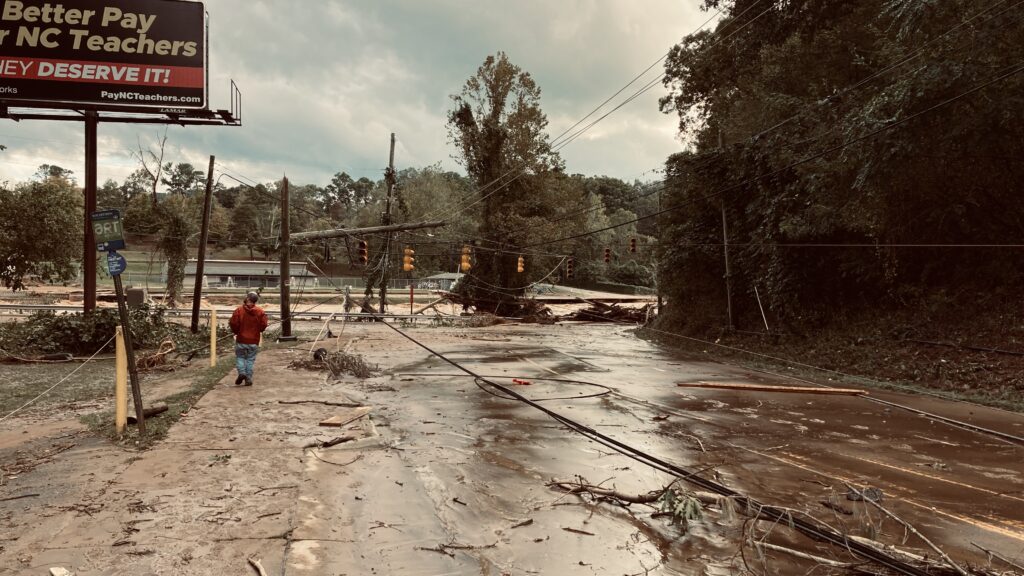
One year ago, Western North Carolina was forever changed by Hurricane Helene. Roads and bridges were washed out, families displaced, and businesses impacted. We both saw neighbors helping neighbors, organizations stepping up, and our town staff working nonstop.
We are two elected leaders in Western North Carolina and remember the harrowing moments on and after September 27, 2024. The night the storm hit, sleep was unimaginable. Trees crashed, wind and rain were howling, and electricity flickered before it finally went out for good.
The power did not come back on for days, and for some, it was more than a week. In the morning, as the storm calmed, thousands in Western North Carolina woke up to darkness and no cellphone service, surrounded by flood waters and downed trees.
A couple of days into the storm, we shared a brief, static-ridden phone call between Boone and Fletcher, N.C., a little less than 100 miles apart. It was one of the few phone calls that we were able to get through. We remember asking each other about the other’s communities and how they were doing. We were both out doing similar activities: passing out food and water, knocking on doors to check on neighbors, working with town staff to secure resources and plan while standing alongside our community to support in every way possible.
The work looked similar in Fletcher and Boone: Neighbors helping neighbors.
One year later, we are writing this reflection with a note of caution: it is OK to look back, but it is not yet time to reflect on Helene. This recovery is still very much ongoing. Treating Helene as an event locked in the past would be a disservice to our communities and the many families still impacted.
In part, that’s because the state and federal response has been slow. As we have pushed state and federal officials and done what we can at the local level, we both expect and wish that the same effort we put forth would be reciprocated by the state and federal government. According to the Governor’s Recovery Office for Western North Carolina, North Carolina has requested federal funding to cover 48% of Helene’s damage and as of late September, only 9% of those federal funds have been awarded.
To be clear, we are grateful for the resources and support from the state and federal response that has come in thus far. But across WNC, local governments have deficits in their budgets that will be unsustainable long-term.
Many towns operate with scarce resources and have had to bear the burden of covering costs for Helene’s recovery until the Federal Emergency Management Agency (FEMA) reimburses our towns.
If local governments do not promptly receive reimbursements, it will lead to difficult conversations and decisions involving potential cuts to schools, roads and other infrastructure.
This is not just about a cost to local governments. Residents in Fletcher, Boone, and across Western North Carolina continue to grapple with the loss of homes and property. Meanwhile, business owners are still struggling to recover after losing one of their busiest seasons. A few facts about the impact:
- Hurricane Helene caused $59.6 billion in damage in North Carolina
- $2.6 billion in crop loss
- $12.4 billion in economic losses
- 74,000 homes damaged
- 108 verified storm-related fatalities.
In Fletcher, Diamond Brand, a business over a century old, closed its doors as a result of Hurricane Helene. This resulted in the loss of jobs and a business that is steeped in history.
The Southchase neighborhood, also in Fletcher, experienced torrential flooding — it has never flooded before. In Boone, a manufactured home community faced intense flooding, displacing many families and destroying their homes.
Stories like these abound. There is still a long way to go, and we are working urgently to meet these needs. We need the same urgency from our federal and state partners.
Frankly, lives are at stake. The families we checked on in the immediate aftermath of the storm are in our minds — especially elderly folks coming to the porch, tears in their eyes, unsure of what was next. There are too many still living in transitional housing. Others are continuing to slowly put the pieces together and need all the help they can get.
Helene is not over. As long as we still have a single family unhoused, a bridge that remains to be rebuilt, and any life still reeling from the disaster, we should only commemorate this anniversary with action.
Dalton George is the mayor pro tempore of Boone, N.C. Preston Blakely is the mayor of Fletcher, N.C. Follow them on Instagram @daltonforboone and @prestonb_nc. This column is syndicated by Beacon Media and is available to republish for free on all platforms under Beacon Media’s guidelines. Contact info@beaconmedianc.org with questions or comments.