The writer argues that the murder of a white woman by a Black man on a train in Charlotte, N.C., became the latest incident used for political convenience by our leaders.
By Martin Henson
Beacon Media
In 200 years of American presidents, there haven’t been many times a sitting president has actively recommended the death penalty for a civilian murder.
But it did not surprise me when President Donald Trump called for the death penalty, the case involved a Black man as the perpetrator. I expect a narrative justification of black criminality to start my day, one that frames the 13% of black people in America who make up 37% of the prison and jail population as normal. The daily headlines represent this, subscribing to the mantra, “if it bleeds it leads,” and that blood is almost always Black.
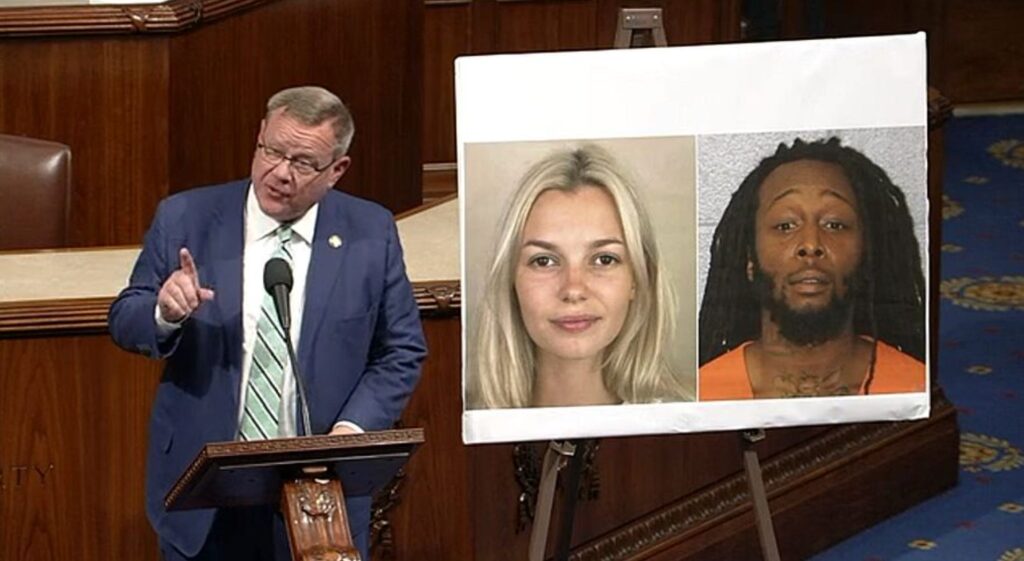
I saw the mugshot of a Black man first, which came without surprise. Racial connotations must be associated; my body prepares for what I will somehow be indirectly blamed for as a Black man.
The focus is to advance power. The news has informed me that I should know Iryna Zarutska was killed on August 22 by Decarlos Brown Jr., a man suffering from severe mental health issues on a North Carolina train.
How is this death different from the young man who was killed at a Durham hotel, the house party mass shooting victims in Catawba County, or the little boy that was killed by a stray bullet in Charlotte? All of them newsworthy, but none of them capturing the attention of a sitting president and legions of online keyboard warriors.
Now we know: the groundswell of political narratives follow shortly after the screen pans away from the initial image of Brown’s mugshot, preceding the supposed solutions that would have prevented the murder.
The victim and perpetrator’s names fade away, and I see President Trump calling for the death penalty, the North Carolina legislature making comments about a 2020 racial equity task force and the death penalty, and a preemptive attack on the Democratic candidate running for a 2026 Senate seat.
Soon, North Carolina’s Republican-majority legislature will rush through what they call anti-crime legislation, “Iryna’s Law.” Lawmakers hope to increase the use of the death penalty, knowing that Black people are nearly eight times more likely to be wrongfully convicted of murder than others. North Carolina’s Democratic governor, Josh Stein, plays along with this cynical plot and signs the bill.
The murder falls into the background.
In fact, none of these urgent declarations or actions would have prevented Iryna Zarutska from being murdered. Experts on violence say that “Iryna’s Law” isn’t a serious attempt to curb such violence. These efforts, just for one example, do not provide the mental health services that Decarlos Brown Jr. desperately needed.
These people, one a victim of murder, the other of mental illness, become a series of identity-based taglines that political opportunists exploit for familiar plot lines that they sell us day after day.
A dangerous Black man, a pretty white woman—a politically convenient victim. Unfortunately, another reason why political actors want to exploit this murder: It occurred with a knife and not a gun. That allows us conveniently to ignore that 82% of all homicides that occur every year happen with a gun in North Carolina, according to EveryStat and federal data.
San Francisco had its own version of a similar crime in 2018, except the victim was a Black woman, Nia Wilson. She was killed by a white man, John Lee Cowell, who was also navigating a mental health episode and wielding a knife in a place where people take public trains.
Back then, President Trump did not break from presidential decorum to remind us of the death penalty; he did not state, as he did in response to the Charlotte murder, “We have to be vicious, just like they are.” He was not interested in meddling in judicial affairs to respond to the murder of a Black woman. Not then, not now, never, unless she is one of the “they” he is supposedly trying to protect society from.
In my 36 years, I have only seen Black people used as political pawns. I have learned to absorb what I am supposed to know. I would like for this world to be different; where Decarlos Brown Jr. gets the support he needs and where Iryna Zarutska is still alive.
We can still work toward that, but society has to stop squeezing every unfortunate event for as much political juice as possible and focus on solutions that actually help people and solve problems.
I will be watching the news tomorrow. As always, I have no doubt, the blood will still be Black.
Martin Henson lives in Raleigh. He is an advocate andexecutive director of BMEN Foundation, which convenes Black men to address issues in their lives and communities. See his work at MartinHSpeaks.com. This column is syndicated by Beacon Media and is available to republish for free on all platforms under Beacon Media’s guidelines.