One effort shows that area farms can play a role in helping to feed people. Will that be enough with the current crisis in food assistance?
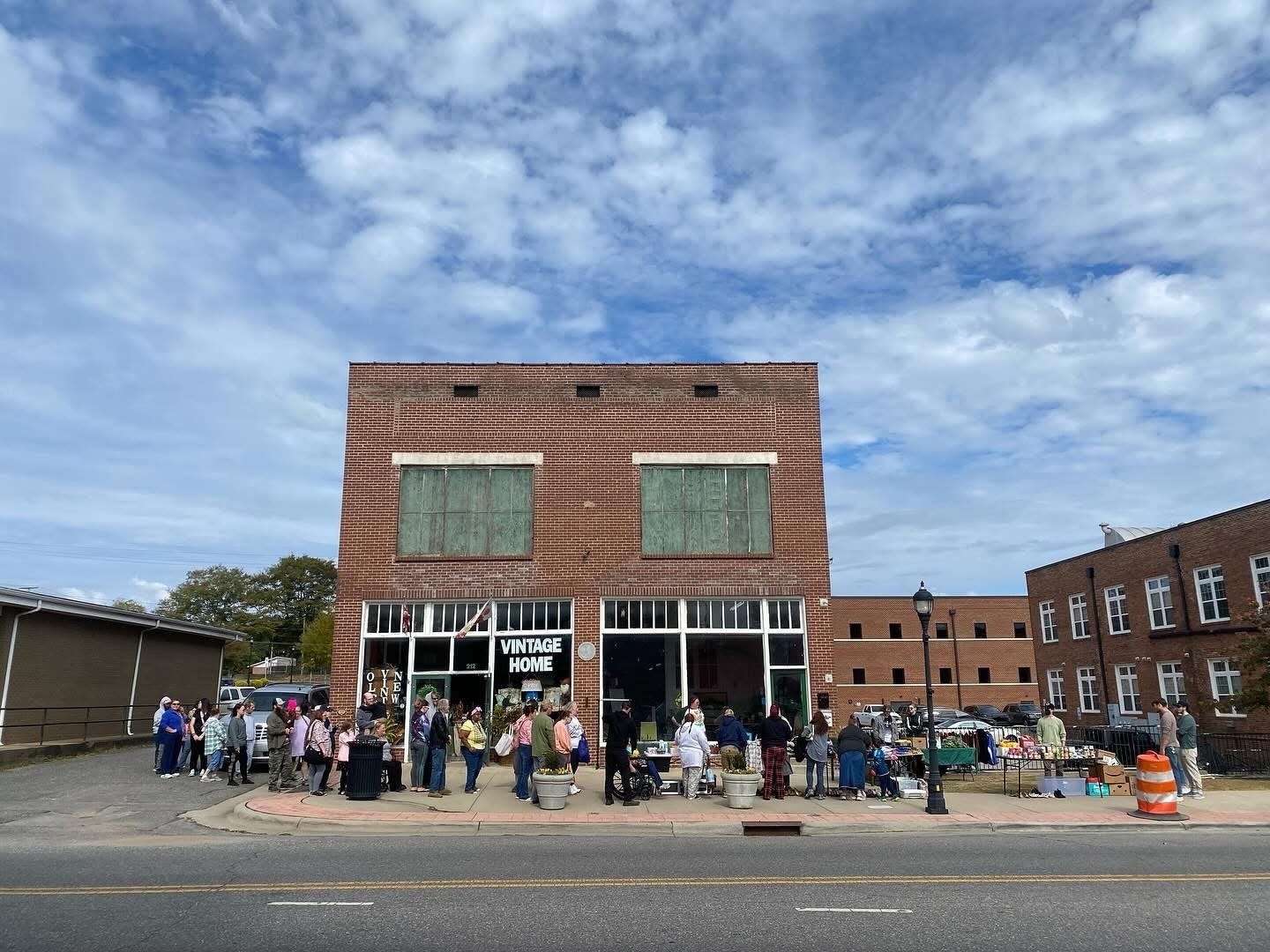
The line for food assistance wraps around the block at the Broad River Community Market on October 26, 2025, in Shelby, N.C. Photo by Megan Murphy, used with permission. CC4.
How I know people are struggling right now is the line to the food pantry at Episcopal Church The Redeemer near where I live in Shelby, N.C., has grown longer and longer with each passing week. The church distributes food on Wednesdays to around 300 people. Another church, Shelby Presbyterian, set up a community fridge in response to a noticeable increase in members and non-members reaching out to the church for help, including utility bills and food.
And this was before the federal government shut down (and then reopened). There is still a lot of uncertainty when it comes to the Supplemental Nutrition Assistance Program (SNAP) and what food assistance benefits those who rely on the program will get.
In Cleveland County, 21% of the population receives SNAP benefits. If the community fridge being emptied as fast as it can be filled doesn’t indicate necessity, maybe the cars lined up around the little churches does. The news is similar around North Carolina as food pantries and deliveries see surging demand.
This will only get worse. Community members and food pantry directors told N.C. Health News that demand is surging and food pantries may not be able to keep up with federal dollars expected to be limited in the coming weeks, even with the government reopening.
It’s worth knowing that for every one meal a food bank provides, SNAP provides nine, according to data from Feeding America, a nationwide network of food banks, pantries and feeding programs.
We need innovative solutions to meet the needs of our people. In Cleveland County, I really love the work of Broad River Community Market, co-founded by farmers Megan Murphy and Dylan Emory.
Their goal is simple and revolutionary: use their skills and donations from other farms in the area who have excess crops to give free and fresh food for whoever needs it, no questions asked.
The first pop-up Broad River Community Market was planned for early October 2024. It turned out to be just 10 days after Hurricane Helene had left parts of the county destroyed and without power. During a state of emergency, Dylan and Megan knew they needed to step up. So they thought about postponing.
Ultimately, they chose not to postpone their debut pop-up — and got straight to work.
The response was huge. “I think BRCM gave people the opportunity to get plugged into community care that looked different than what they had seen before in Cleveland County,” Dylan told me via text.
Both Megan and Dylan have a passion for sustainable agriculture. They both work with Old North Farm, which also hosts events and other agri-tourism opportunities to stay afloat.
The community market started because they both felt that area farms could share more — whether it’s excess crops or those that don’t sell. What would it mean for farms from the community to feed their own community?
That’s the key to the operation. Several farms have stepped up to donate crops to meet the needs of an impoverished community struggling to afford groceries. Shelby is the largest city in Cleveland County with around 22,000 residents, and it has one of the highest poverty rates in Western North Carolina at 31.4%.
Donations are another way community members have stepped up to keep the Broad River Community Market rolling.
Dylan hopes other communities will adopt their model.
Utilizing our own resources to help our own rural communities is so important. It is our responsibility to take care of one another.
Since their last event in October, Broad River Community Market has seen a sobering and steady uptick in attendees to their pop-up events. The large crowd of more than 200 and growing put some strain on their supply, but Dylan told me that the market is going to find a way to meet the demand.
They are harvesting more from their own farm and other local farms, “are filling up the table,” he said. “We don’t see the need getting smaller anytime soon,” he said.
Initiatives like Broad River Community Market aren’t just a supplemental band-aid for the crisis. BRCM is a model that every rural community in North Carolina should consider.
North Carolina has a deep agricultural legacy. We celebrate this legacy at our local county fairs every year. Why can’t we utilize this relationship with the land to feed our own neighbors?
Sharing has become a concept we teach to our children and fail to practice ourselves. Rural North Carolinians have always been the stewards of community building and taking care of each other. In that, lies our power.