
After many came forward to tell stories of abuse at the hands of the celebrated Latino organizer of farmworkers, the author tells us how to honor this complex legacy.
By Iliana Santillán
Beacon Media
A decade ago, when I was teaching fourth grade in Apex, North Carolina, my students were preparing for a wax museum project. Each of them had to choose a historical figure, research their life, and then “become” that person for a day.
I remember reviewing the list of approved figures and feeling something was missing.
There were no Latino names.
So I added them.
I added César Chavez. I added Dolores Huerta. I added Sonia Sotomayor.
And I remember how my students reacted—especially to Chavez.
They lit up.
Chavez organized farmworkers in the early 1960s, helping migrant farmworkers ensure they had access to water to drink, protection from pesticides and weren’t forced to work in unsafe conditions. When he died in 1993, he was considered a folk hero.
My kids got it: They enthusiastically talked about the strikes, about organizing farmworkers, about someone who looked like their families standing up and winning. For many of them, it was the first time they saw a Latino leader framed as a hero in their curriculum.
I’ll never forget one of my students asking me, “Miss, is he really Mexican?”
That question stayed with me.
Because it said everything about what our kids are used to: not seeing themselves in history, questioning whether they belong in it, whether they can lead, whether they can shape anything at all.
And in that moment, I felt proud.
Proud that I had expanded the story. Proud that my students could see themselves in someone like Chavez, in someone like Huerta, in the power of “Sí, se puede” (Yes, it can be done).
But what I didn’t fully understand then—and what I cannot ignore now with the revelations that Chavez abused women and girls —is how incomplete that lesson was. This week, Tuesday, March 31, is César Chavez Day, a federal commemorative holiday. In the wake of allegations published in the New York Times about Chavez’s abuse of women and girls, it is more important than ever to consider what his true legacy means.
It wasn’t just that certain names were missing from my list.
It’s that we were taught to put men on a pedestal—and to let women take the back seat.
Across movements, across history, across the stories we tell in classrooms and communities, it is men who are elevated. Even when there are questions about their character, their behavior, or the harm they caused, we are taught to focus on their achievements, to contextualize their actions, to forgive what would never be forgiven in women.
We are taught to admire first. And question later—if at all.
Violence against women is not an anomaly. It is an epidemic that cuts across race, class, and geography. And still, when it is found out, it is minimized. Questioned. Dismissed. And ultimately normalized.
In my own life, I think about the women around me—cousins, aunts, nieces. Stories that were never fully spoken, but always understood. The kind of silence that isn’t empty—it’s heavy. It shapes what we accept, what we excuse, what we learn to live with.
And it raises a question I can’t ignore anymore: What do we do with what we know now?
Because I think about that classroom often.
About those students who saw themselves in history for the first time.
And I ask myself: what would I do differently today?
How do I still teach them to believe in their power, in their ability to lead and build and change the world? I would not ask them to ignore the full truth.
Because we should not have to choose between pride and honesty.We can hold both.
We can acknowledge the impact of Chavez, the organizing, the movement-building, the doors that were opened for farmworkers and Latinos in general. And we can also name what has been overlooked, what has been silenced, and who carried the weight of that silence.
We can say clearly: women were there. Women led. Women endured.
Women like Dolores Huerta, who worked alongside Chavez and we know now was abused by him.
And women whose names we may never know.
We cannot keep normalizing violence against women—not in our homes, not in our communities, not in our movements. We cannot keep building narratives that celebrate progress while ignoring the harm that made it possible. And we cannot ask the next generation to inherit that silence.
If there is anything I know for sure, it is this: telling our stories matters.
Every time we speak, something shifts. Someone else recognizes themselves. Someone else feels less alone.
That is how change begins.
So my commitment is simple: To keep creating space and telling our stories.
In our hands, women have the responsibility and the opportunity to shape our collective future.
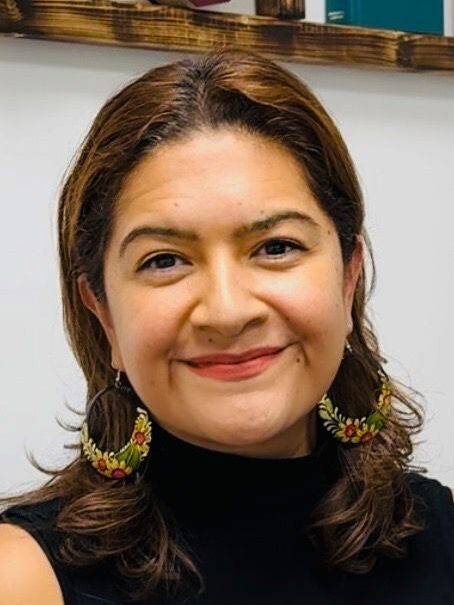
Iliana Santillán is a Mexican immigrant, educator, advocate, and mom leading the charge for Latino power in North Carolina. She is the co-host of El Faro, Beacon Media’s Latino media arm. See her work for El Faro on Beacon Media’s Instagram and TikTok. This column is syndicated by Beacon Media and is available to republish for free on all platforms under Beacon Media’s guidelines.