
After many came forward to tell stories of abuse at the hands of the celebrated Latino organizer of farmworkers, the author tells us how to honor this complex legacy.
By Iliana Santillán
Beacon Media
A decade ago, when I was teaching fourth grade in Apex, North Carolina, my students were preparing for a wax museum project. Each of them had to choose a historical figure, research their life, and then “become” that person for a day.
I remember reviewing the list of approved figures and feeling something was missing.
There were no Latino names.
So I added them.
I added César Chavez. I added Dolores Huerta. I added Sonia Sotomayor.
And I remember how my students reacted—especially to Chavez.
They lit up.
Chavez organized farmworkers in the early 1960s, helping migrant farmworkers ensure they had access to water to drink, protection from pesticides and weren’t forced to work in unsafe conditions. When he died in 1993, he was considered a folk hero.
My kids got it: They enthusiastically talked about the strikes, about organizing farmworkers, about someone who looked like their families standing up and winning. For many of them, it was the first time they saw a Latino leader framed as a hero in their curriculum.
I’ll never forget one of my students asking me, “Miss, is he really Mexican?”
That question stayed with me.
Because it said everything about what our kids are used to: not seeing themselves in history, questioning whether they belong in it, whether they can lead, whether they can shape anything at all.
And in that moment, I felt proud.
Proud that I had expanded the story. Proud that my students could see themselves in someone like Chavez, in someone like Huerta, in the power of “Sí, se puede” (Yes, it can be done).
But what I didn’t fully understand then—and what I cannot ignore now with the revelations that Chavez abused women and girls —is how incomplete that lesson was. This week, Tuesday, March 31, is César Chavez Day, a federal commemorative holiday. In the wake of allegations published in the New York Times about Chavez’s abuse of women and girls, it is more important than ever to consider what his true legacy means.
It wasn’t just that certain names were missing from my list.
It’s that we were taught to put men on a pedestal—and to let women take the back seat.
Across movements, across history, across the stories we tell in classrooms and communities, it is men who are elevated. Even when there are questions about their character, their behavior, or the harm they caused, we are taught to focus on their achievements, to contextualize their actions, to forgive what would never be forgiven in women.
We are taught to admire first. And question later—if at all.
Violence against women is not an anomaly. It is an epidemic that cuts across race, class, and geography. And still, when it is found out, it is minimized. Questioned. Dismissed. And ultimately normalized.
In my own life, I think about the women around me—cousins, aunts, nieces. Stories that were never fully spoken, but always understood. The kind of silence that isn’t empty—it’s heavy. It shapes what we accept, what we excuse, what we learn to live with.
And it raises a question I can’t ignore anymore: What do we do with what we know now?
Because I think about that classroom often.
About those students who saw themselves in history for the first time.
And I ask myself: what would I do differently today?
How do I still teach them to believe in their power, in their ability to lead and build and change the world? I would not ask them to ignore the full truth.
Because we should not have to choose between pride and honesty.We can hold both.
We can acknowledge the impact of Chavez, the organizing, the movement-building, the doors that were opened for farmworkers and Latinos in general. And we can also name what has been overlooked, what has been silenced, and who carried the weight of that silence.
We can say clearly: women were there. Women led. Women endured.
Women like Dolores Huerta, who worked alongside Chavez and we know now was abused by him.
And women whose names we may never know.
We cannot keep normalizing violence against women—not in our homes, not in our communities, not in our movements. We cannot keep building narratives that celebrate progress while ignoring the harm that made it possible. And we cannot ask the next generation to inherit that silence.
If there is anything I know for sure, it is this: telling our stories matters.
Every time we speak, something shifts. Someone else recognizes themselves. Someone else feels less alone.
That is how change begins.
So my commitment is simple: To keep creating space and telling our stories.
In our hands, women have the responsibility and the opportunity to shape our collective future.
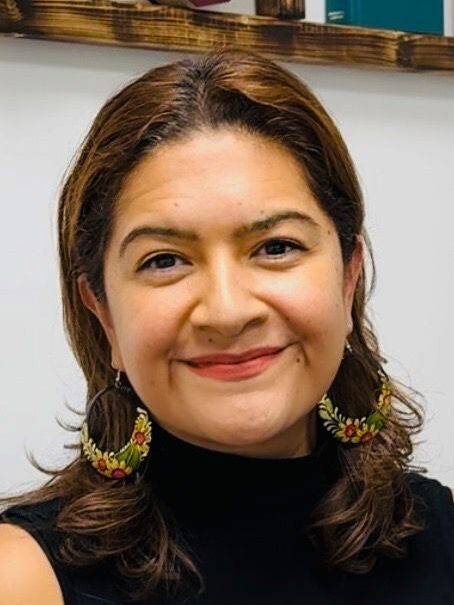
Iliana Santillán is a Mexican immigrant, educator, advocate, and mom leading the charge for Latino power in North Carolina. She is the co-host of El Faro, Beacon Media’s Latino media arm. See her work for El Faro on Beacon Media’s Instagram and TikTok. This column is syndicated by Beacon Media and is available to republish for free on all platforms under Beacon Media’s guidelines.
Iliana Santillan: En este Día de César Chávez, alentando toda la verdad
Después de que muchos salieron a contar historias de abuso a manos del célebre organizador latino de trabajadores agrícolas, la autora nos cuenta cómo honrar este complejo legado.
Por Iliana Santillan
Beacon Media
Hace una década, cuando enseñaba cuarto grado en Apex, Carolina del Norte, mis alumnos se preparaban para un proyecto de museo de cera. Cada uno de ellos tenía que elegir a un personaje histórico, investigar su vida y luego “convertirse” en esa persona por un día.
Recuerdo que revisé la lista de figuras aprobadas y sentí que faltaba algo.
No había nombres latinos.
Así que los añadí.
Añadí a César Chávez. Añadí a Dolores Huerta. Añadí a Sonia Sotomayor.
Y recuerdo cómo reaccionaron mis alumnos, especialmente con Chávez.
Se les iluminó el rostro.
Chávez organizó a trabajadores agrícolas a principios de la década de 1960, ayudando a trabajadores agrícolas migrantes a garantizar que tuvieran acceso a agua para beber, protección contra los pesticidas y que no se les obligara a trabajar en condiciones inseguras. Cuando falleció en 1993, era considerado un héroe popular.
Mis alumnos lo captaron: hablaban con entusiasmo sobre las huelgas, sobre el organizamiento de los trabajadores agrícolas, sobre alguien que se parecía a sus familias levantándose y triunfando. Para muchos de ellos, era la primera vez que veían a un líder latino presentado como un héroe en su plan de estudios.
Nunca olvidaré cuando uno de mis alumnos me preguntó: “Maestra, ¿de verdad es mexicano?”
Esa pregunta se me quedó grabada.
Porque decía todo sobre lo que nuestros niños están acostumbrados a vivir: el no verse reflejados en la historia, el cuestionar si pertenecen a ella, si pueden liderar o si pueden crear cambio en absoluto.
Y en ese momento, me sentí orgullosa.
Orgullosa de haber ampliado la historia. Orgullosa de que mis alumnos pudieran verse reflejados en alguien como Chávez, en alguien como Huerta, en el poder del “Sí, se puede”.
Pero lo que no entendí del todo entonces —y lo que no puedo ignorar ahora, tras las revelaciones de que Chávez abusó de mujeres y niñas— es qué tan incompleta era esa lección. Esta semana, el martes 31 de marzo, se celebra el Día de César Chávez, un día festivo federal conmemorativo. A raíz de las acusaciones publicadas en el New York Times sobre los abusos de Chávez contra mujeres y niñas, es más importante que nunca reflexionar sobre el verdadero significado de su legado.
No fue solo que faltaran ciertos nombres en mi lista.
Es que nos enseñaron a poner a los hombres en un pedestal—y a dejar que las mujeres tomen un segundo plano.
A través de movimientos, a través de la historia, a través de las historias que contamos en los salones de clase y en las comunidades, son los hombres quienes resultan más valorados. Incluso cuando surgen dudas sobre su carácter, su comportamiento o el daño que causaron, se nos enseña a centrarnos en sus logros, a contextualizar sus acciones y a perdonar lo que nunca se perdonaría en las mujeres.
Nos enseñan a admirar primero. Y a cuestionar después, si es que lo hacemos.
La violencia contra las mujeres no es una anomalía. Es una epidemia que trasciende la raza, la clase social y la geografía. Y aun así, cuando se descubre, se minimiza. Se cuestiona. Se descarta. Y, en última instancia, se normaliza.
En mi propia vida, pienso en las mujeres que me rodean: primas, tías, sobrinas. Historias que nunca se contaron del todo, pero que siempre se entendieron. Ese tipo de silencio que no es vacío, sino que pesa. Es lo que da forma a lo que aceptamos, lo que justificamos y con lo que aprendemos a vivir.
Y esto me plantea una pregunta que ya no puedo seguir ignorando: ¿qué hacemos con lo que sabemos ahora?
Porque frecuentemente pienso en ese salón de clases.
Sobre aquellos estudiantes que se vieron reflejados en la historia por primera vez.
Y me pregunto: ¿qué haría diferente hoy?
¿Cómo puedo seguir enseñándoles a creer en su poder, en su capacidad para liderar, construir y cambiar el mundo? No les pediría que ignoraran toda la verdad.
Porque no deberíamos tener que elegir entre el orgullo y la honestidad. Podemos sostener ambas.
Podemos reconocer el impacto de Chávez, su labor de organización y desarollo de movimientos, así como las puertas que se abrieron para trabajadores agrícolas y latinos en general. Y también podemos nombrar lo que se ha pasado por alto, lo que se ha silenciado y quiénes han sobrellevado el peso de ese silencio.
Podemos decir claramente: las mujeres estaban allí. Las mujeres lideraron. Las mujeres aguantaron.
Mujeres como Dolores Huerta, que trabajó junto a Chávez y de quien ahora sabemos que sufrió abusos por parte de él.
Y mujeres cuyos nombres quizá nunca lleguemos a conocer.
No podemos seguir normalizando la violencia contra las mujeres: no en nuestros hogares, no en nuestras comunidades, no en nuestros movimientos. No podemos seguir construyendo narrativas que celebren el progreso mientras ignoramos el daño que lo hizo posible. Y no podemos pedirle a la próxima generación que herede ese silencio.
Si hay algo de lo que estoy segura, es esto: contar nuestras historias es importante.
Cada vez que hablamos, algo cambia. Alguien más se reconoce a sí mismo. Alguien más se siente menos solo.
Así es como empieza el cambio.
Así que mi compromiso es simple: seguir creando espacios y contando nuestras historias.
En nuestras manos, las mujeres tienen la responsabilidad y la oportunidad de dar forma a nuestro futuro colectivo.
Iliana Santillán es una inmigrante mexicana, educadora, activista y madre liderando la lucha por el poder latino en Carolina del Norte. Es copresentadora de El Faro, la división de medios latinos de Beacon Media. Puedes ver su trabajo para El Faro en el Instagram y el TikTok de Beacon Media. Esta columna es distribuida por Beacon Media y puede volver a publicarse de forma gratuita en todas las plataformas siguiendo las directrices de Beacon Media.