A Black mayor in Western North Carolina reflects on a conversation with his grandmother, who fought for civil rights and the Voting Rights Act 50 years ago. In the wake of the U.S. Supreme Court decision last week, that fight continues.
By Preston Blakely
Beacon Media
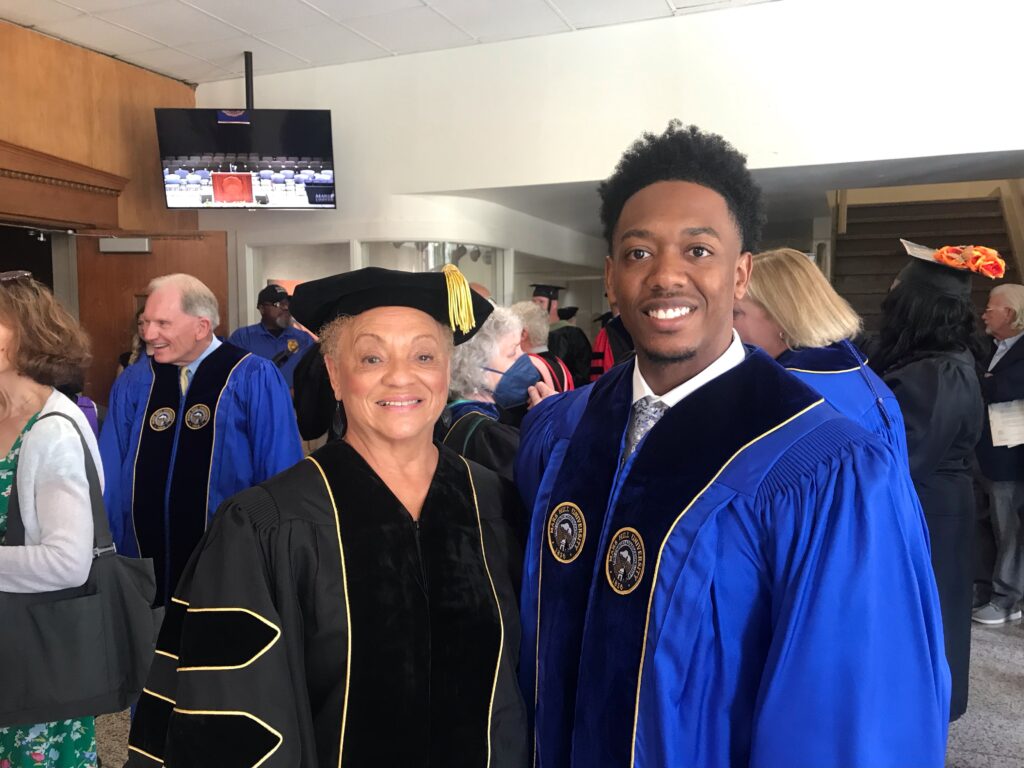
I asked my Grandma “OG” what she thought about the right to vote, after the U.S. Supreme Court last week effectively stripped away the protections afforded by the 1965 Voting Rights Act.
Oralene Simmons, or as I call her, “OG,” is an 83-year-old Black woman and civil rights activist from Western North Carolina. She told me she remembered a time when Black folk were asked to say how many bubbles were in a jar with water and detergent or how many beans were in a jar — as “tests” to be able to vote.
It tells you how relatively little time has passed before our nation’s highest court decided the law that ensured all could vote wasn’t necessary anymore.
Last year, I wrote about both of my grandmothers and their experience in Jim Crow America. These women existed in a system where voting was dangerous. When I wrote the piece, I talked about how far we have come.
We’ve come a long way, but we’ve again taken big steps back.
I am a janitor and also the mayor of Fletcher, North Carolina. I have served as mayor since 2021, elected at 27-years-old. My Grandma Pat was a bus driver who wanted dignity for blue-collar workers like her. When my Grandma Pat was born, she would have been sent to the back of the bus. But she decided she wanted a spot in the front, so she drove it.
OG was at the forefront of the Civil Rights Movement in Western North Carolina. She and I quite often find ourselves together, and we chat about the world.
Most recently, we discussed the Voting Rights Act and the recent U.S. Supreme Court decision. The Court’s ruling on Louisiana v. Callais effectively finished the court’s gutting of the VRA, an act that ensured the right to vote and that Black people, particularly in the South, received representation. As Justice Elena Kagan wrote in her dissent, the “[Voting Rights Act] was born of the literal blood of Union soldiers and civil rights marchers. It ushered in awe-inspiring change, bringing this Nation closer to fulfilling the ideals of democracy and racial equality. …I dissent, then, from this latest chapter in the majority’s now-completed demolition of the Voting Rights Act.”
I was incredibly curious about how my grandmother felt about all this after her lifelong fight for these rights. OG bluntly replied to my questions: “It is racial discrimination.” I could sense the sadness and frustration in her voice. She reflected on the marches that Dr. Martin Luther King Jr. led for our right to vote. I could only imagine so intensely fighting and winning this inalienable right in your lifetime, only for it to be pulled from under you.
OG talked about the barriers that prevented Black people from voting. The counting of beans or reciting the Constitution’s preamble was a barrier to voting to make sure Black people weren’t represented. Things that we can unequivocally say were wrong.
We may not be counting beans, bubbles, or reciting the preamble to vote today, but when protections weaken, power shifts. When it becomes more difficult to challenge systems, barriers still exist, even if more quietly. The Voting Rights Act was supposed to make sure Black people had representation and weren’t discriminated against, no matter what.
The less obvious discrimination includes systems, maps, and rules that may seem neutral but are often wielded against the less powerful.
OG said, “We’ve been here before.” I think she said that because it doesn’t have to look exactly like Jim Crow to feel familiar to her.
Progress is fragile. I worry about representation, our vote, and our democracy. I love this country, and I want it to love me back. I think OG feels the same. Our democracy is measured by whether every voice carries equal weight.
At the end of the conversation with OG, she said, “It’s time for us to organize. It’s time for us to mobilize. We’ve been here before, and we’re still singing, ‘We Shall Overcome.’”
I stand on the shoulders of giants.
My grandmothers lived through a time when their rights were denied. We, OG included, are living in a time where democracy is diluted sometimes quietly, sometimes loudly. OG’s words were filled with frustration, but gave me the sense that our responsibility is the same. We must continue to protect our democracy.
What we do next will determine what comes after us — we must continue the progress that OG and so many others started.
Preston Blakely is the mayor of Fletcher, North Carolina, and the co-host of the podcast “Do You Even Live Here?”