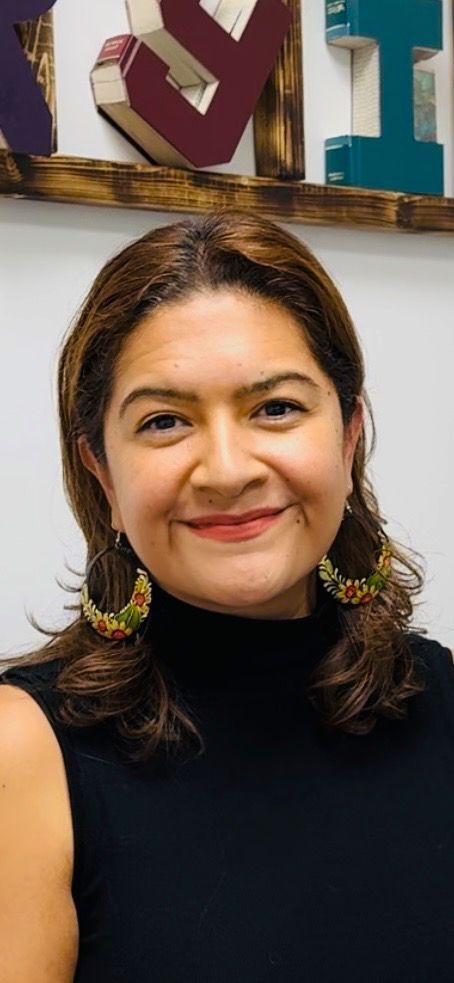
Traveling to the federal detention center in Stewart County, Georgia, Iliana Santillán attended the hearing of a friend and emerged with a greater understanding of those detained by ICE.
By Iliana Santillán
Beacon Media
LUMPKIN, GEORGIA — The first thing I packed for the federal detention center in Stewart County, Georgia, was hope.
The night before my trip to the private federal detention center in rural Georgia, I stood in front of my closet thinking about what my friend Suzy Geronimo might want to wear when she got out. A dress. Makeup. Shoes. I thought about what she might want to eat after weeks inside detention. I thought about whether she would want silence, music, rest, or simply the chance to feel like herself again.
I packed a suitcase, believing that there was a good chance I was about to bring my friend home.
Suzy is a well-recognized trans leader and longtime community organizer in North Carolina with deep and long-held relationships within the Latino community. She has spent more than 30 years in North Carolina advocating for immigrant communities, those who identify as LGBTQ, for public health, and preaching civic participation across North Carolina.
A trans immigrant does not engender much goodwill with very many folks at the General Assembly.
And yet it was there in Raleigh that I first got to know Suzy, fearlessly making the argument for all of those issues anyway to any lawmaker who would talk to her.
Even though she’s been outspoken on these issues for more than 30 years, her status, like so many, is being questioned and she is fighting to stay in her adopted country. A traffic ticket and other brief entanglements with police landed her in this remote detention center.
As I waited at least four hours inside the detention center in Lumpkin, Georgia, for Suzy’s bond hearing to begin, I stared at a wall filled with more than 100 names of people waiting for immigration court that same day.
Mexican. Salvadoran. Honduran. Guatemalan. Venezuelan. Colombian. Jamaican.
I listened to stories about men with children waiting for them at home. I heard about families trying to gather bond money. I listened to stories about people who had lived in the United States for decades and found themselves suddenly locked inside a detention center hundreds of miles away from the communities that know and love them.
One man had ended up in detention after a car accident. The accident wasn’t his fault — but he was picked up and detained anyway.
Another had children with special needs depending on him.
Case after case, what unfolded in those detention center courtrooms did not resemble the caricatures many Americans have been taught to fear. In fact, these people were just so ordinary.
That is the part we rarely talk about.
The national conversation around immigration has become so distorted that many people imagine detention centers as places holding dangerous criminals. But after spending time inside, I left with a very different understanding. The government’s own statistics earlier this year showed that fewer than 14% of the people arrested by federal immigration authorities during the Trump administration’s time have a violent criminal record, according to CBS News.
What I saw there was the vast majority of people trapped inside a system built for fear, uncertainty, and isolation.
When I finally saw Suzy, I whispered her name.
Her real name.
Suzy.
And I watched her face soften for a moment.
Because in a place designed to strip people of dignity, even hearing your name can remind you who you are.
Suzy looked like she was freezing during the hearing. She held onto her arms tightly the entire time, her body tense, her skin covered in goosebumps from the cold air blasting inside the courtroom. I could see her anxiety. I wanted to take her hand, breathe with her for a moment, remind her that she was not alone and that people back home were waiting for her.
I could see how detention had worn her and others down, physically, emotionally, mentally.
What I witnessed inside the detention center was not public safety. It was human suffering.
During a separate, prior visit to this detention center, I watched a grandmother walk out holding the hands of two little girls after they had visited their father. The girls began crying almost immediately because they did not know when they would see him again.
The grandmother tried to stay strong for them, but once they walked outside, you could see the weight of it all hit her at once. Later, I learned the girls had begun struggling in school and dealing with insomnia.
They were six and eight years old.
Suzy did not come home with me after that hearing on Thursday, May 21. The prosecutor cited the Laken Riley Act in keeping her detained, and another hearing is expected to be scheduled soon. That Act passed with a bipartisan majority in Congress in 2025 and requires the detainment of those who have been charged (but not necessarily convicted) of certain crimes, ostensibly to keep communities safer.
But the people inside this detention center were not the caricatures Americans have been taught to fear. They are parents. Workers. Grandparents. Community members.
Suzy had hoped that bond would be set and she’d be able to fight the charges from home. I was the only person, both from the media and as a friend, who had been able to make this hearing on short notice.
I’m grateful I was there. Suzy saw a familiar face. She heard her real name. And for at least a moment, she knew she had not been forgotten and that she was not alone.
Iliana Santillán is an immigrant from Mexico, founder of the movement group Brava NC, and a leader advancing civic engagement and political power-building in North Carolina. Iliana is a collaborator on Beacon Media’s Latino community media project, El Faro.
Título de la publicación en español