The court case that North Carolina educators had long been hopeful would prod a reluctant General Assembly to produce a better public education system was dismissed this year by North Carolina’s top court. Those who care about North Carolina’s public schools need a new rallying cry.
By Kimberly Jones
Beacon Media
For the first time in three decades, North Carolina educators are heading back to school this week without the court case that had become a rallying cry for public schools known as Leandro.
On April 2, the state Supreme Court dismissed Leandro, a lawsuit that asked for what North Carolina’s Constitution has promised: a sound, basic education for every child.
The case became the argument for the courts forcing what the General Assembly has refused to do, allocating the money and resources necessary to improve our schools, creating opportunity for every child.
The court didn’t say the underlying problem was solved. It said the courts were no longer the venue to fix it. There is no more multibillion-dollar remedy plan working its way through the system. No more waiting on a court order. No one is coming to write the check.
So we need something else to rally around. I’d argue we already have it, and it’s not a case number. It’s the work itself.
Here’s the thing about a courtroom loss: it doesn’t touch the state Constitution. Article I, Section 15 of the North Carolina Constitution says: “The people have a right to the privilege of education, and it is the duty of the State to guard and maintain that right.”
Our demand to uphold the Constitution matters most this year, because what our kids need to succeed is shifting under our feet.
Every corporate partner who walks into a school talks about workforce readiness, about building “the workers of tomorrow.” It’s a fair goal, but I keep coming back to a harder question underneath that phrase: which kids get to be the workers, and which get to be the ones who design the work?
That’s not a hypothetical divide. It’s the same haves-and-have-nots fault line Leandro spent 30 years trying to close, just wearing new clothes, this time drawn along who has access to real technology instruction and thoughtful AI integration paired with meaningful discourse and critical thinking, and who gets a locked-down device and a worksheet.
There’s a bigger transformation happening underneath all of this, and it isn’t unique to North Carolina. Schools everywhere are being pushed toward AI as the answer to almost everything, and parents and communities are pushing back, not really about screens themselves, but about a quieter fear: that kids are losing the muscle to think without one.
That fear is producing a real call for social and interpersonal skills, the human parts of learning that no algorithm can replace. North Carolina already has language for this. The state’s own Portrait of a Graduate names seven durable skills our students need: adaptability, collaboration, communication, critical thinking, empathy, a learner’s mindset, and personal responsibility. None of those come from a screen. They come from a classroom where a highly qualified teacher is paying attention and building meaningful learning.
I think about two kinds of students, and I want to be clear that both matter equally. There’s the kid who was counting on a stable factory job, the kind that used to be there for a hardworking eighteen-year-old with a diploma, and finds that field automated out from under an entire graduating class before commencement even happens. And there’s the kid who did “everything right”, went to college, trained for a field, and still walks the stage to find that field reshaped underneath them, all of it moving faster than a four-year degree can keep up.
Neither of those students is a cautionary tale. Both of them reflect the labor market our students are entering. That’s why public schools can’t sort kids early into “college kids” and “workforce kids.” The skills that serve both are the same: the ability to pivot, learn new tools quickly, even help build a field that doesn’t exist yet. Thirteen years of public education aimed at one fixed destination is not a plan for either kid. It’s gambling with futures that aren’t ours to risk.
I am a humanities teacher in my 21st year, a field some say we don’t need because it doesn’t relate directly to a job. When I ask my colleagues what they’re really teaching, they’ll tell me that underneath the annotation and essays, students are really learning far more: how to read a situation, build an argument, revise under pressure, and adapt when the first draft doesn’t work. These are the most valuable skills in an uncertain economy.
Critical thinking isn’t a soft skill anymore. It’s the whole game.
This is where I think North Carolina public schools can actually lead. We don’t need to rally around Leandro this year. We get to rally around each other, around kids who are watching more closely than we know, to see whether they’ll get real instruction or a screen and a script, whether they’ll be handed the work or taught to help design it, and around a Constitution that still says what it always said. That’s still worth showing up for, with purpose, resolve, and joy.
As parents and educators, let’s recommit to teaching and living out these critical thinking skills ourselves. Let’s tell our stories publicly, and demand from our leaders that North Carolina’s public education system gets the funding and resources it needs, so our students grow up to shape the future, not just work inside it.
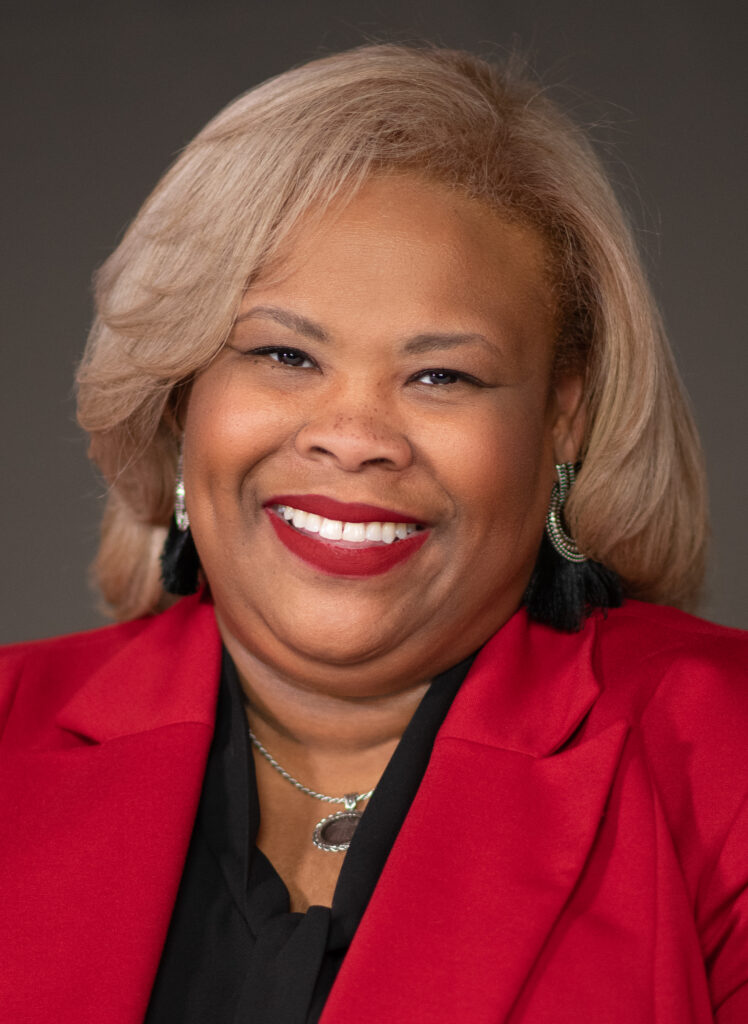
Kimberly Jones is a 21-year public school educator and the 2023–24 North Carolina Teacher of the Year. She teaches English and AP African American Studies at Chapel Hill High School and is a longtime advocate for strong, equitable public schools. This column is syndicated by Beacon Media and is available to republish for free on all platforms under Beacon Media’s guidelines.