North Carolina data center proposals are rousing many to take on local battles across ideological and partisan lines in communities across the state.
By Gwen Frisbie-Fulton
Beacon Media
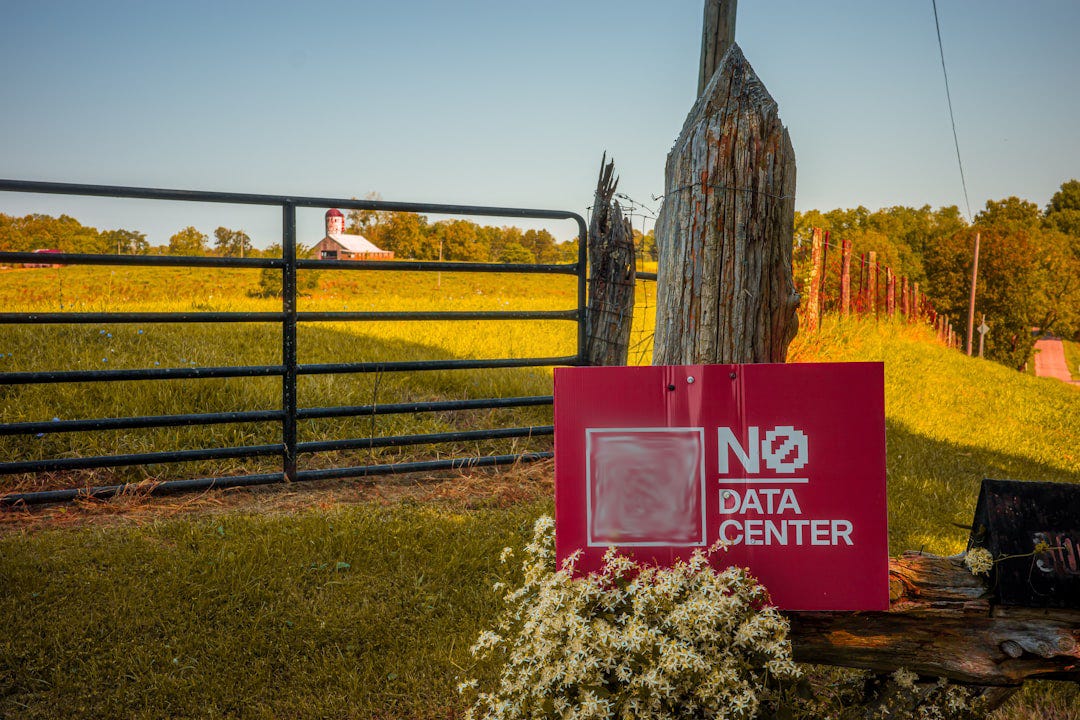
If you drive through beautiful, rural Stokes County, you will see golden leaf tobacco yellowing in the fields.
You’ll also see tidy rows of corn and soy, old tobacco barns, and modest farm houses, the kind built in the 1930s and maintained by facetious MawMaws and PawPaws over the years. You’ll see sweet gums and tupelo trees.
And you’ll see anti data center signs. Lots and lots of these.
It was late 2025 when the Stokes County “Project Delta” was first proposed; a 1,848-acre hyperscale data center project that would go in along the Dan River and would use enormous methane gas generators for power as it waited to be tied into the Duke Energy grid.
Immediately, local residents raised concerns about the data centers noise and water usage, air pollution, and the impact on energy prices– prices that are already rising at a breakneck speed due to the data center boom. The Stokes County planning board agreed with local residents and recommended against the rezoning necessary for the center to be built.
But in January, the Stokes County Board of Commissioners approved the rezoning anyway, along with an amendment opening the door for similar data center projects countywide. Local residents, who had been showing up in unprecedented numbers in this small rural community to voice their opposition, were outraged that they had been ignored.
A month and a half later, local primaries were held. To a last one, the incumbent County Commissioners who had voted to approve Project Delta were resoundingly defeated. One of the incumbents who had voted in favor of the project came in dead last in an 8-way race.
Then, a month later, the Stokes County Board of Commissioners formally voided their prior rezoning decision, and it has been scheduled for a new hearing in front of county commissioners on September 14.
Data centers are poised to be a hot issue on ballots across North Carolina this fall. From Richmond County to Statesville and Greensboro, residents have been turning out to oppose new data center construction. The citizen opposition is working: in places like Rural Hall, a rezoning request was not approved, and in Edgecombe County the company behind a major data center proposal gave up and pulled out.
Defeating these data centers is one thing; keeping score on the decision-makers is another.
North Carolinians want to know where candidates stand on data centers. Many people are finding themselves unwittingly in the crosshairs of these developments, knowing that their land, water, and even electric bills are going to be negatively affected and, as a result, are forced to get involved. Other residents who have been dutiful partisan voters are now reconsidering the rubber-stamping of their party and digging deep into individual candidates’ positions on a variety of issues, data centers and development notwithstanding.
Local residents have been getting a crash course in democracy through these fights — and they care.
It’s a mistake to think this agitation stops at data centers or NIMBYism. From my conversations with residents in Stokes County, the data center is representative of a larger, more existential concern: Who do our elected leaders actually represent? Do they work for us, or for big corporations?
Local politics and politicians typically have been able to hum along unnoticed to much of the citizenry, voted in by low turnout and determined by a given towns’ prevailing partisanship. But data centers have blown up all that.
Local citizens are engaged, eager, organizing and imagining new futures — and they are looking outside traditional partisan structures for answers. Candidates will be facing an activated and engaged electorate this fall and would be wise to choose their positions carefully.

Gwen Frisbie-Fulton is a North Carolina storyteller and organizer who writes about race, class, gender and politics in the South. Follow her work on Substack at Working Class Storytelling. This column is syndicated by Beacon Media and is available to republish for free anywhere under our guidelines.