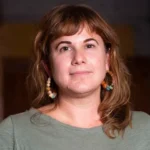
In 2022, restaurant owner Tiffany Dahle in Stanly County, N.C., hosted a drag brunch that drew threats. Here’s why she’s still fighting for her community.
By Gwen Frisbie-Fulton
Working Class Storytelling
Masked men were marching up the street in downtown Albermarle, North Carolina. Cars slowed down at the spectacle, but zipped away before the children in their backseats could see. It wasn’t exactly the sort of thing you want to run into on a sleepy Saturday small town afternoon.
Tiffany Dahle watched from her restaurant’s front door with her phone ready in her hand. The men were handing out flyers with her name on them.
They wore gaiters, sunglasses, and hats to obscure their identities.
“It’s just not normal to do that,” Tiffany thought. “This is a friendly town, a family town.”
It was 2022, and Tiffany’s small business was still reeling from the pandemic. She had been trying to think creatively about how to bring people back into downtown Albermarle, which had all but become a ghost town. When customers said that they would sometimes drive an hour away to Charlotte to attend drag shows, Tiffany had an idea: Why should local people have to drive and bring their money that far away when we could just do that here?
So she booked performers and put up an ad for a drag brunch. It sold out so fast, she quickly scheduled a second show.
Tiffany was born and raised in Stanly County; she’s now raising her own family here. It’s all she knows, and it’s what she loves. “I guess you always hear about ‘conservative’ and ‘liberal’ but I never knew which one I was,” she told me. “People don’t have to see eye to eye to be friends or to respect each other here.”
Nonetheless, she knew a drag show wouldn’t be for everyone. “I figured a few old ladies might not like it, but I figured they’d do what everyone does when they don’t like something around here… they just wouldn’t come.” Others would love the idea of a drag brunch and come out and spend some money at her restaurant. Live and let live.
When the phone calls started, Tiffany was taken off guard. Some of them were harassing, others threatening. Some callers told Tiffany to “go back where she came from,” even though she was from right here. Online, people called Tiffany a groomer and a pedophile.
The harassment was being orchestrated by an extremist group called the Proud Boys. Most of them lived outside the county, and when they came to Albermarle to hand out flyers, they drove from hours away.
When they couldn’t convince her to cancel the show, the group tried to get the local city council to pass an anti-drag ban.
That’s when Tiffany decided she needed to speak out.
She went to her local city council monthly meeting, something she’d never done before. She’d never considered herself ‘political.’ She took a deep breath and spoke. She spoke about being a mom, about being a business owner, and about being from here — and then she spoke about everything she wanted Albermarle to be.
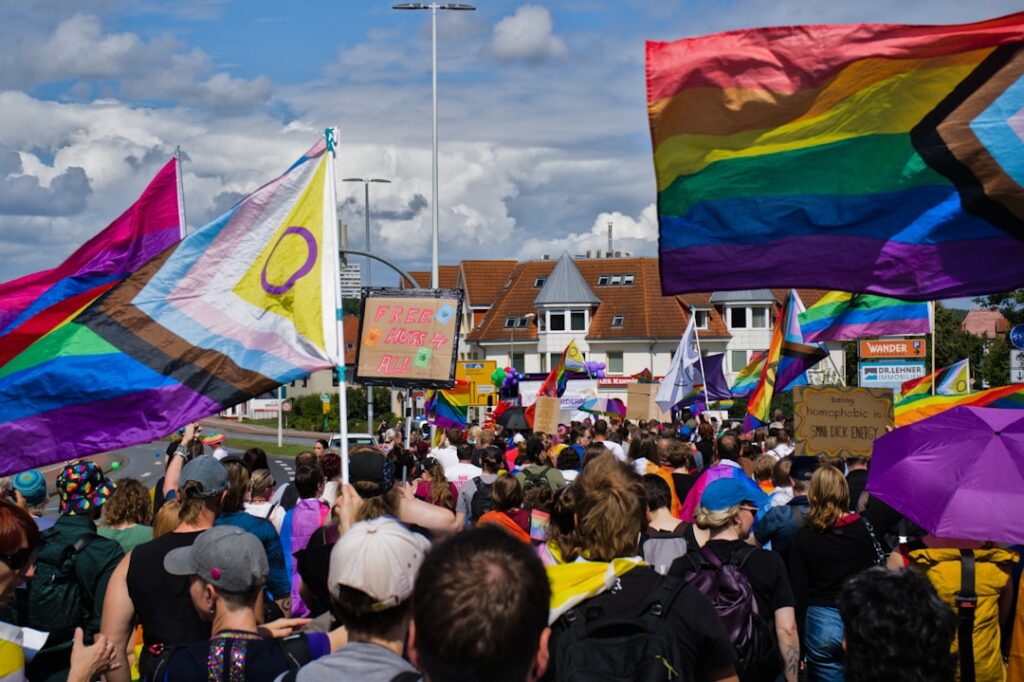
The day of the first drag brunch arrived. Proud Boys had called for a protest outside her restaurant, but it never forumulated. Instead, East Main Street’s sidewalks were flooded with supporters – young people waving small rainbow flags, old folks in Love is Love t-shirts. Local downtown businesses were jam-packed with customers that day.
The brunch was such a success that Tiffany booked more shows through the year, making drag a regular feature in Albemarle. The next year, the city council voted 4-3 to reject a ban on drag performances.
“Things became political that didn’t used to be and don’t need to be,” observes Tiffany. “People are trying to dictate how other people live their lives, and that to me doesn’t seem like what anyone wants.”
The whole ordeal changed the way that Tiffany interacts and relates to her county — for the better. Instead of making her shrink away, she is more engaged than ever.
Tiffany has now helped launch a PFLAG chapter in Stanly County, a support group for the local queer community, hosting book clubs and events. She’s part of the newly launched Indivisable Uwharrie chapter, which has been hosting listening sessions to hear from the community. Just this spring, she helped launch a voter guide for the county. “We don’t care about party affiliation or when you voted last,” she says. They just want to get people involved.
I’ve met hundreds of Tiffany’s across North Carolina. Regular, small town people who have been called to action in fraught political times. These are mechanics and teachers, servers and stay-at-home moms who didn’t think of themselves as “political,” but are now stepping up to do incredible things for their communities. Tiffany was frightened, but then she saw the safety and support her town was offering and leaned in.
I wish this for all of our communities, no matter where we call home.
The original, full version of this column was published at Working Class Storytelling on Substack. Gwen Frisbie-Fulton is a North Carolina writer and organizer who writes about working-class issues and people.
Gwen Frisbie-Fulton: Qué significa vivir con el salario mínimo en Carolina del Norte.
Carolina del Norte no ha aumentado el salario mínimo desde el 2009 y sigue estancado en el mínimo federal. Ya es hora de que el estado de un paso adelante por sus trabajadores.
Por Gwen Frisbie-Fulton
Beacon Media
Cuando el calendario marcó el 2026, se incrementó el salario mínimo en Arizona, California, Colorado, Connecticut, Hawái, Maine, Michigan, Minnesota, Misuri, Montana, Nebraska, Nueva Jersey, Nueva York, Ohio, Rhode Island, Dakota del Sur, Vermont, Virginia y Washington.
Pero no Carolina del Norte.
Nuestro salario mínimo sigue en $7.25 dólares, igual que en el 2009 (el mínimo federal).
Hace poco hablé con un padre joven recién entrando en sus veintes en la ciudad de Wilkesboro. Él, su novia y su hijo de dos años viven con su abuela, a quien pagan por una habitación. No es lo ideal me dijo. Él está deseando independizarse y establecer a su familia en su propia casa o departamento en algún lugar. “Pero no puedo imaginar cómo vamos a conseguirlo”, dijo, sacudiendo la cabeza.
Yo tampoco puedo imaginarlo. Él trabaja ganando $8.50 la hora en un equipo de jardinería y su novia es mesera en un restaurante local, donde gana el salario mínimo de Carolina del Norte para personas que ganan propinas, que es de solo $2.13. En una noche ocupada, puede llegar a acumular $10 la hora.
Eso no te lleva muy lejos en Wilkesboro ni en ningún otro lugar en el 2026. Tampoco sirvió de mucho en el 2009. La familia se encuentra en la situación más fácil posible dadas las circunstancias económicas: dos padres que trabajan con un solo hijo y que viven en un condado rural relativamente barato, pero aun así su futuro financiero parece desolador. La calculadora de salario digno del MIT estima que una familia de este tamaño y composición necesita casi $10,000 al año para alimentos y otros $10,000 para el cuidado de los niños, $14,000 al año para transporte y $17,000 al año para vivienda. En otras palabras, ambos padres necesitan ganar más de $20 por hora para poder mudarse de la casa de la abuela.
Están muy, muy lejos de eso.
Ha habido intentos de subir el salario mínimo en Carolina del Norte; la legislación más reciente fue presentada el año pasado. Pero tanto el proyecto de ley 339 de la Cámara de Representantes (Ley de Seguridad Económica), que subiría el salario a 20 dólares la hora, como el proyecto de ley 326 del Senado (Ley de Salario Mínimo Justo), que lo subiría a 18 dólares la hora siguen estancados sin haber recibido siquiera una audiencia.
Negarse a aumentar el salario mínimo es un gran perjuicio para los trabajadores de Carolina del Norte, y esa inacción está generando una crisis lenta en nuestras comunidades.
En la misma visita a Wilkesboro, visité un campamento de personas sin hogar situado en el bosque detrás de un centro comercial. De los seis hombres que vivían allí, todos trabajaban, pero sus salarios no eran suficientes para conseguir una vivienda. Vivir al aire libre en invierno estaba afectando su salud; un hombre había pasado las dos últimas noches en la sala de emergencias. Todos ellos dependían de los servicios de las iglesias: uno de ellos dependía de una iglesia para ir a su trabajo cada día, y los demás, para obtener comida y otras ayudas básicas.
Me alegra que esas iglesias están ahí para ellos, pero ya es hora de que los legisladores federales y de Carolina del Norte también se pongan las pilas. Este es un gran estado, pero no es barato vivir aquí. Nos están superando estados con un costo de vida significativamente más bajo. Ningún trabajador debería depender de la caridad, y los pueblos y condados no deberían verse obligados a esforzarse por apoyar a más y más personas que se ven en una situación inestable debido a salarios criminalmente bajos.
Durante demasiado tiempo, Carolina del Norte se ha posicionado como uno de los estados más favorables para los negocios. Mi viaje a Wilkesboro me recordó la realidad: esto se consigue a costa de nuestra gente.
Gwen Frisbie-Fulton es una escritora y organizadora de Carolina del Norte que escribe sobre temas y personas de la clase trabajadora. Escribe Working Class Storytelling en Substack.
Esta columna es distribuida por Beacon Media y puede volver a publicarse de forma gratuita en todas las plataformas según las directrices de Beacon Media.