Small town pride events showcase the best of us. Why do some still want to stoke hate?
By Gwen Frisbie-Fulton
Beacon Media
Editor’s note: This column, first published in 2024, has been updated from its original version.
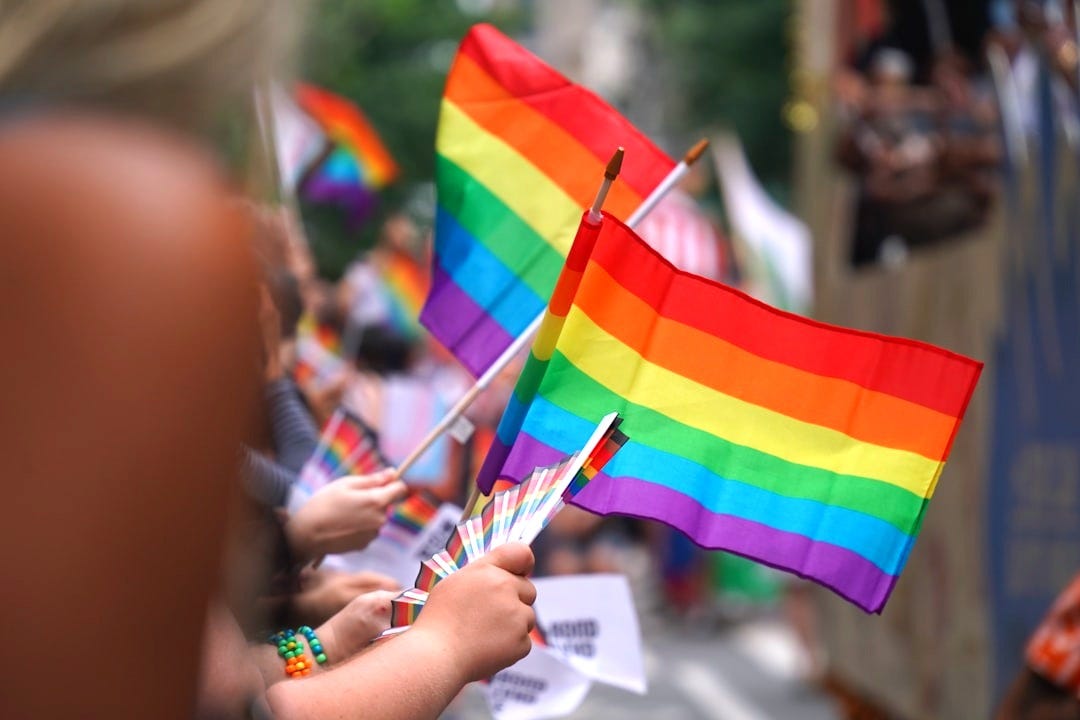
From Sylva to Wilson, from Boone to Shelby, small towns across North Carolina are celebrating Pride—turning small parks and main streets into brightly colored, swirling places of laughter and energy.
There is something distinctly charming about a small-town Pride festival, less commercialized than those in big cities. Like all parades and community events in our small towns, there’s something more organic and homegrown, with small local businesses, families, and church groups working to create wonderment together.
I’ve eaten a rainbow-shaped sugar cookie from a bakery in Elkin so buttery that it melted in my mouth; I’ve helped a young child reattach their glittery fairy wings before prancing off after a parade around a barn in Pittsboro; I’ve listened to a sermon in Kinston where the pastor told us we are all designed to love one another, no exceptions.
To some, these rainbow-drenched barbecues, festivals, dance parties, and church services may feel new. That doesn’t mean gay and lesbian and trans folks haven’t been here all along.
An estimated three million or more people who identify as LGBTQ call rural America home; they were born here, build their families here, and run businesses here. Growing up, my dentist in rural Virginia was gay, my middle school math teacher was lesbian, my great-aunt was trans.
Queerness is as old as humankind—so why are some people acting so surprised it’s here?
Pride has been celebrated in the United States and North Carolina for decades now, but it’s meeting new resistance. Nationally, anti-LGBTQ demonstrations and violence rose high over the last decade. In 2024, law enforcement agencies sharing data with the FBI reported 2,278 hate crimes based on sexual orientation and 527 based on gender identity. Those numbers are down from record-breaking numbers in 2023, but remain high historically, according to The Advocate.
In North Carolina, this has looked in recent years like extremist groups such as the Proud Boys showing up to disrupt a family storytime in Wilmington and neo-Nazis showing up to protest drag queens in Sanford. In South Carolina, a man shot up a gay nightclub in Myrtle Beach in April and has been charged with a hate crime.
UNC-Chapel Hill and UNC-Greensboro, institutions once known for crusading for civil rights, posted and then took down online posts expressing support for Pride because of new restrictions by the Board of Governors.
What did UNC-Chapel Hill’s post say? “The Tar Heels are for everyone.”
For a country that prides itself on freedom and progress, where does this backlash come from– and why now?
Because to explain away a faltering economy, to make Americans peck at each other instead of at failed leadership, they need to find someone to blame. Anti-LGBTQ legislation is being pushed at the state level. In many states, lawmakers have introduced bills that would prevent transgender children from participating in sports and from seeking gender-affirming medical care. As Pride month started this year, the American Civil Liberties Union (ACLU) is tracking over 500 anti-LGBTQ bills across the nation, including 9 in North Carolina.
Even when they don’t pass, introducing this legislation and adding them to public discourse alone is harmful. They feed false narratives about “groomers” and “indoctrination,” and imply that it is normal to legislate and control each others’ identities, choices and lives in both private and public spaces.
All of this casts a dark cloud over otherwise sunny and festive Pride celebrations. There has been backlash against the queer community before, both with oppressive legislation and violence, but nothing at this level of political coordination and strategy. So, again, more than 10 years after marriage equality became the law of our land and as more Americans than ever join in Pride celebrations, why is this happening now?
The answer is as old as time: divide and conquer. Instead of appealing to our greater selves and bringing solutions to any of the real pressing issues of the day, some politicians are forever looking for ways to keep us apart, so we don’t vote and act together. With election margins razor thin in places like North Carolina, many have given up on trying to persuade voters to their side and have resorted to rallying voters against each other.
Politicians rarely bully someone their own size. The queer community is an easy target, with only 7 percent of adults in the United States identifying as LGBTQ. The trans community is an even easier target; while 70 percent of Americans say they know someone who is gay, only one in five say they know someone who is trans, and those who are transgender make up an estimated 1.7 percent of the population.
The truth is, these communities are being singled out as politically advantageous boogeymen.
We have seen this divide and conquer scheme work, but I know that people where I come from care about their neighbors and each other’s rights.
Right now, I’m glad to see small towns all across North Carolina pull out their bubble machines and rainbow tutus and turn up the music to play a little joy. Pride celebrations represent and benefit all of us in North Carolina, the state where we want everyone to call home.
Gwen Frisbie-Fulton is a North Carolina storyteller and organizer who writes about race, class, gender and politics in the South. Follow her work on Substack at Working Class Storytelling.