
Let us question ourselves and what we think we know as an act of empathy, Rabbi Hannah Bender of Judea Reform synagogue argued in their Rosh Hashanah or New Year’s sermon in September.

Editor’s Note: This sermon was delivered by Assistant Rabbi Hannah Bender at Judea Reform synagogue in Durham, N.C., in September as part of the annual Rosh Hashanah service, ushering in the Jewish New Year 5786. It is reprinted here with permission.
By Rabbi Hannah Bender
Where do birds go in the winter? South. South! Yes, this is a truth we know, that birds fly closer to the equator, somewhere warmer, which is why for some parts of the year, we do not see them.
We know this because we have records, we are in communication with people around the world observing birds in their flight. But until the 1820s, this was not common knowledge. For thousands of years, people had no idea what happened to birds during the winter, and they came up with theories about why they “disappeared”.
Some of the theories that people came up with are hilariously wrong. The first recorded idea is in the Iliad, where Homer notes, quite casually, that cranes fly to Africa to do battle with the Pygmies. Aristotle, as brilliant as he was, believed that birds would go into hibernation during winter. That they would tuck themselves into rocks, hills, some types of birds even flying to the bottom of lakes to take a few months of rest during the winter.
The craziest theory I think is from the Archbishop of Brican, Gerland of Wales, who believed that some birds actually transform into barnacles, attaching themselves to ships, and then transform back to birds when the colder season is over.
All of this information came from a podcast — The Constant: A History of Getting Things Wrong. In each episode, the host takes us through truths and information that we may take for granted, and shares all the wild and wrong things people used to think about them. From theories about what the moon is made out of, how babies are made, to why it rains.
It lays out, in a funny and sometimes cringey way, a human history of unlearning. It has prompted questions for me, how do I know what I know? What if some of the truths I hold, in 30, 50, 100 years, will be proven hilariously, or devastatingly, wrong?
During the High Holidays we are called to reflect, to take on a stance of humility. We are to look back at our last year and reflect — where have I gone wrong? What are the sins I have committed, against God, against others, against myself? How can I do better in this coming year?
The invitation for this reflection is a gift as we move through this season. This is what we call teshuvah, translated as repentance and return. It gives us the opportunity to return to the divine, return to our core values, by admitting when we have been wrong. When we engage in this work, we can emerge into the new year renewed, with a new sense of purpose, and with hope- despite the pain that may accompany the process.
One “truth” that lives deeply in our culture right now is that admitting that one is wrong, is a weakness, is a failure of conviction. There is less and less room for change and growth. Which makes the command to do teshuvah, to admit our wrongdoings, that much more radical and counter cultural.
We are entering a new year, 5786. When entering any new year, though we have the opportunity to be renewed, we still carry with us the pains and challenges in our lives and in the world. These days, it is especially heavy. There is no doubt that we are living in a time of radical shifts. Of fear, instability, injustice, the normalization of massive human suffering, and deep cultural polarization.
It is in this time of destruction, of pain, that in our teshuvah, we should not be called only to reevaluate our actions, but also, our own beliefs.
What do we believe? What is an idea that lives in us as true? Assumptions we have that we have never questioned? Where have our hearts hardened, keeping us from other truths? Where might we be wrong in how we see the world and how it functions?
Tomorrow, we will hear Genesis 22 read from the Torah. This is the story of the Akeidah, the binding of Isaac. This is the moment when God puts his faithful servant, Abraham, to a test, and tells him to take his favored son, Isaac, to the top of the mountain, and offer him as a sacrifice, only to be stopped, literally as he holds a knife over him. The divine messenger says, Avraham, Avraham!
אַל־תִּשְׁלַ֤ח יָֽדְךָ֙ אֶל־הַנַּ֔עַר
“Do not raise your hand against the boy, or do anything to him.”
Throughout the generations, theologians, philosophers, B’mitzvah students have wrestled with the meaning and truth conveyed in this problematic story. Why would God ask this of Abraham? Why would Abraham just do it? What are we supposed to take from this story, so central to our tradition?
Many of our traditional commentators view the lesson of this story as a celebration of faith on Abraham’s part — something they see as deserving of reward. Abraham showed his deep commitment to God, he would go this far to prove it! How amazing!
Our rabbis and liturgy also praise God in that moment, for the compassion that God showed to Isaac. In the traditional Rosh Hashanah liturgy we praise God, and ask for the compassion that God showed Isaac to also be shown to us, despite all the sins we have committed.
To some modern minds, many are disgusted that God would even ask our patriarch to do this, and are ashamed at how willingly Abraham was to obey.
Underneath this choice is a truth that Abraham believes about God — this is what God wants. This is what I should do, no matter how much pain it causes. Abraham is so willing to forgo his compassion, his love and care for his son, Isaac, to obey a God who is asking him to do something that goes against every corner of our ethical codes.
We are seeing every day how belief in certain truths leads people to do extreme acts, or hold views that may sacrifice compassion. Some of those extreme actions are being celebrated, for some of us we have become numb to them, or have taken on new truths that this is just how the world is.
What we believe to be true, informs our actions. Rabbi Rachel Adler writes in her essay The Torah, Our Chavruta: “What we believe to be true, with all our hearts, with all of our being, with all our might moves us to act in the real world. A believed “truth” can impel one man to mow down a people in prayer with an AR-15. It can move doctors and nurses to treat a racist who would like to kill them. Every day we demonstrate with our actions the truths that we hold.”
Within the akeidah, the moment that the divine messenger calls out to Abraham to stop his sacrifice, they use his name twice. They say, Avraham! Avraham!
Haemek Hadavar, a commentary from the 19th century, says that this was a doubling expressing urgency, he writes, “because Abraham was so enthused in his deed, almost devoid of his physical senses, it was necessary to stop him with an alarming voice before he would turn back to listen.”
This is a moment of unlearning of what God wants from Abraham, and in extension, the Jewish people. In the ancient near east, human sacrifice was not uncommon. Of course, Abraham may think that his God too may want that from him. This is a transformation, a new truth that is asserted through this test — our God does not want us to sacrifice our people.
Some say that the test God was putting Abraham to, was not about the action itself, but about blind faith. That Abraham needed to unlearn that blind faith is not how we are to be in relationship with our God. But that our relationship requires wrestling, pushing back- which we see in many of our ancestors throughout our holy texts and our history.
After the destruction of the second temple in 70CE, our rabbis had to completely rethink all they knew, all they believed about God and Judaism. They had to interrogate a truth they held. That in order to communicate with God, we need animal sacrifices, we need priests, we need a temple.
It is in their interrogation, in their reflection of that truth, spurned from great destruction, that we receive rabbinic Judaism, what we practice now. In their revisiting, we are given more Jewish law, and prayer, the Oral Torah that instructs us about living in community. Out of destruction, our ancestors reinvented the core institutions of our people- democratized it, gave us tools to practice wherever in the world we found ourselves.
There have been many moments of learning and unlearning- spurned from destruction, from pain. The Holocaust forced our people to rethink how God acts in this world- that evil can be human made, not just divine punishment. The rise of the feminist movement brought new expansive inclusive theologies- creating opportunities for us to see the diversity of the human experience in our divine, in our community, in our leaders.
Judaism has never been a static tradition. In fact, so much of Jewish resilience through the ages comes from our spiritual flexibility, our willingness to unlearn and relearn in dialogue with our past and in negotiation with our future.
In this moment in our world, where we are witnessing more destruction, more suffering, than our hearts were ever meant to hold, this is another moment where we are called to reassess what we believe to be true. Not only our opinions, but the truths that lie underneath them. To re-examine our worldviews, our beliefs. The truths we hold about being American citizens, the truths we hold about the State of Israel, truths about how we can gain safety and security as a people, ideas we hold about other groups of people- democrats, republicans, Jews, muslims, christians, Israelis, Palestinians.
It is comforting to believe, to feel that we have the truth. But sometimes, these truths can become idols themselves, can lead us, like Abraham, walking up a mountain, knife in hand, ready to sacrifice more than we should.
All the time, we see the lengths that people will go to for the truths they hold. We are witnessing a normalization of violence, seeing people, governments, sacrificing human compassion for their truths that lay in greed. In this time especially, we need to be able to recognize these urges in ourselves, and take a stance of humility that teshuvah calls for, entertaining the thought that we might be wrong, lest our beliefs become idols.
There is another interpretation of the story of the Akedah, that depicts a radical shift, not only in our patriarch, but in our creator. Ibn Ezra writes in the 11th century in response to his colleagues who thought that God’s plan was never to sacrifice Isaac, that “these great scholars required these interpretations because they said it is not possible for God to command something and then say not to do it…. But they did not note multiple corrections in God’s words throughout our texts.”
He suggests here that even God can change God’s mind. That the divine can unlearn, change, relearn. Some commentaries even hint that God may regret the test itself. Saying that this story could be seen as a moment of divine reckoning. A recalibration of what kind of relationship our creator wants with us.
In the last few months I have been reading the writings of Rabbi Kalonymous Kalman Shapira, the Rebbe of the Warsaw Ghetto, attempting to learn from a beloved ancestor witnessing and experiencing the depths of human made evil. On Rosh Hashanah 1941 he wrote, “The Hebrew word teshuvah means repentance and return. However, Teshuvah is not a simple return. We return to who we are meant to be, but have not yet become. We return to growth and possibility that has lain dormant within us and not yet flourished, much as a sculpture lies hidden within a brute block of stone. That is why the process of Teshuvah, as painful and even humiliating as it can be, is in fact very joyous and hopeful.”
As we walk into a new year, but no doubt a year as intense, and full of challenge as the one we are leaving behind, it is vital that we interrogate what we actually believe. Because the truths we hold affect our opinions, our actions, our relationships, and in times of massive societal shifts and human pain, we must be willing to pause and search — because we don’t know what this coming year will ask of us, as people living in the United States, as a Jewish community, as individuals.
We can do this by seeking out voices we may not have heard, finding sources we might not normally read or listen to. Challenging cultural, familial, and religious truths. Taking a truth we hold and tracing it, where did I receive this? What is behind it? We can listen for the divine beings yelling our names, calling us to stop, out of love and care and urgency. And ask ourselves, are we willing to hear the voices that interrupt us — and come back down the mountain with a new, more full truth?
The truths we cling to hold much more weight than believing that birds hibernate in the winter. But history, and Jewish text, shows us incredible precedent for being wrong, for unlearning, and learning. Despite what our greater culture is pushing at this moment, playing with the idea that we may be wrong, can lead us towards greater compassion- even if we come out the other side still believing them. It can assist in our turning. It can create space for hope, for connection, for reimagining. This work can lead us to greater joy. Joy that we can change, and if we can change, the world can change. And we know it needs to change.
May this season of teshuvah bring us closer, may we commit to revisiting all that we hold within ourselves. May we see it as a core piece of teshuvah, honoring the changing world around us, so we may all enter this new year with a renewed sense of wholeness, intention, and hope.
L’shana tova (Happy New Year)!
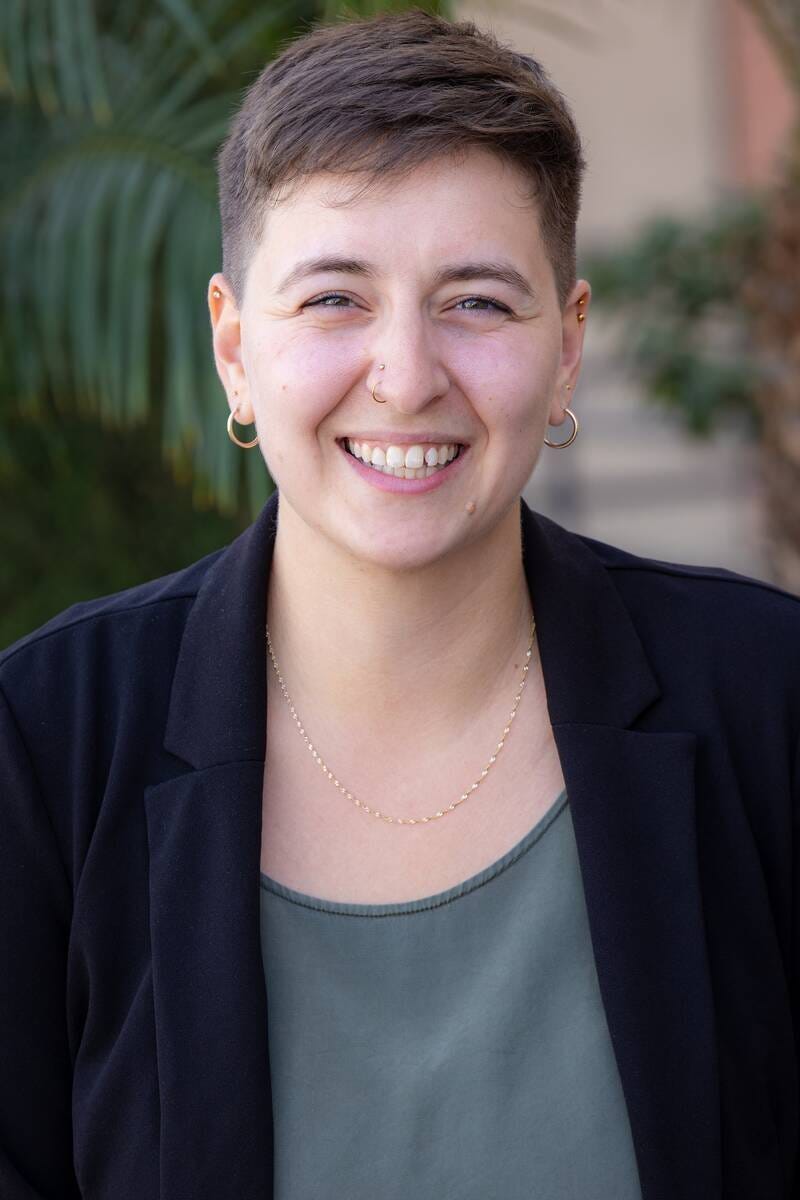
Rabbi Hannah Bender grew up in Madison, Wisconsin and the Western suburbs of Chicago. They received a BA in Religious Studies from the University of Minnesota – Twin Cities and did a year of study at the Conservative Yeshiva. Rabbi Bender is passionate about helping folks find the ways that Judaism can add meaning to their lives, building relationships across lines of difference, and working in community around social justice.